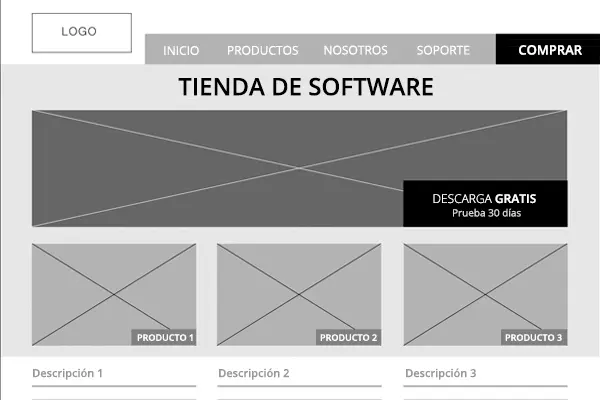
A wireframe is a simplified representation of a page or interface. It defines structure, hierarchy and functionality before visual details such as color, typography and final imagery are introduced.
What a wireframe communicates
Wireframes show the relationship between navigation, content, actions and supporting information. They help teams discuss what belongs on the page and what users should notice first.
Why work at low fidelity
Simple layouts are faster to change and keep conversations focused on usability rather than decoration. Teams can compare alternatives before investing in detailed design or development.
Use wireframes collaboratively
Product, content, design, technology and business stakeholders should review the same structure. Add annotations for behavior that a static image cannot explain, and connect screens when a task spans several steps.
Test the important journeys
Even basic wireframes can be linked into a prototype. Early testing can reveal missing information, confusing labels and unnecessary steps.
A wireframe is not the finished design. It is a decision-making tool that reduces ambiguity before execution becomes expensive.