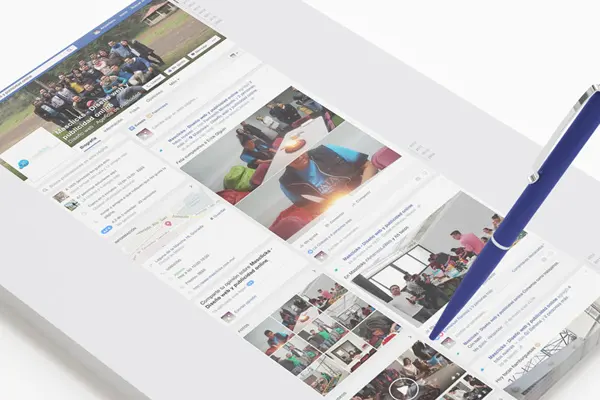
What would a social network look like if its endless feed became a finite printed publication? A creative project explored that question by translating the visual language of Facebook into paper.
A digital interface in a physical format
Profiles, posts, images and familiar interface patterns were reorganized as editorial pages. Removing interaction changed their meaning: a like button could be printed, but it could no longer respond.
What the experiment revealed
Digital products often feel natural because their conventions are familiar. Moving those conventions into print makes their structure visible and shows how much the experience depends on updating, linking and participation.
Historical context
The project belongs to an earlier stage of social-media design, and Facebook’s interface has changed substantially since then. Its relevance now is conceptual rather than functional.
The exercise demonstrates how changing medium changes behavior. Content is not independent from the system through which people encounter, navigate and respond to it.